What is Exodus.js?
Exodus.js is a javascript lightweight framework for using REST and web socket technologies together to get the best power out of both worlds.
Define your REST functions in a way that Exodus understands and Exodus will make sure that all your client app’s are updated in real time.
Why we built Exodus.js?
While working as on creating SPA application's that required a complicated inter-related server architecture (SQL) we struggled to keep our collection based front end's up to date. On the front end we wanted flat data structures that were easy to manipulate and present to our components local scope using libraries like Lodash. We wanted our components to 'just refresh' when their relevant collections / data items changed on the DB, but we didn’t want to have to write lots of boilerplate.
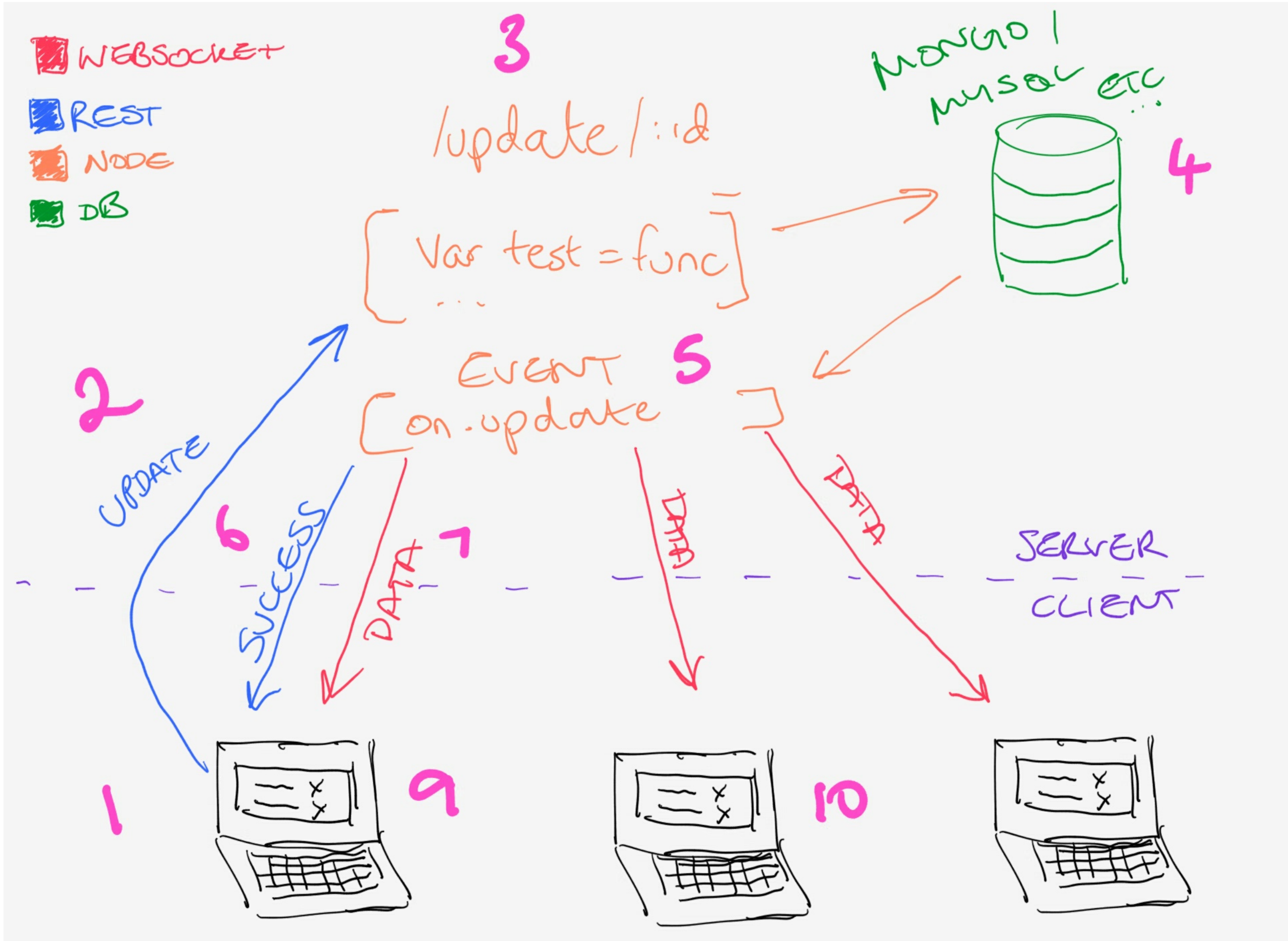
How does it work?
- Client initiates a change
- REST update is sent to the server
- Node handles the request with a reusable function
- Database stores values in any format you like
- Websocket event is emitted to all clients
- REST API is returned with a success
- Original recipient recieves websocket data
- Next client recieves data in the exact same way as previous step
- Client updates component however it needs
- Next client updates it's components
Step 1: Creating your REST endpoints
Create your REST endpoints like X, Y, Z
var test = function(){ alert('test'); };
Step 2: Add your client code
Create your REST endpoints like X, Y, Z